คำถามที่ว่า “เราจะรู้จักพื้นที่แห่งหนึ่งได้อย่างไร?” ในโลกการสื่อสารร่วมสมัยท่ามกลางการประดิษฐ์ซ้ำของข้อมูลจริงเท็จจำนวนมหาศาล จึงไม่ใช่แค่การมองผ่านเลนส์ของนักท่องเที่ยวหรือการค้นคว้าผ่านข้อมูลสำเร็จรูป สำหรับสันติ ลอรัชวี ผลงานศิลปะ “ภูเก็ต ยินดีที่ได้รู้จัก” ในเทศกาล Thailand Biennale, Phuket 2025 จึงเป็นกรณีศึกษาของการใช้กระบวนการออกแบบเป็นเครื่องมือในการสำรวจและนำเสนอความหมายของการดำรงอยู่และการสร้างความสัมพันธ์ระหว่างมนุษย์กับพื้นที่ผ่านแว่นตาสัญศาสตร์และมานุษยวิทยา
การก้าวข้ามขอบเขตจากการเป็นผู้ผลิตสื่อตามโจทย์ สู่การเป็นผู้สร้างโจทย์เพื่อค้นหาสาระชุดใหม่ ถือเป็นจุดเปลี่ยนสำคัญในผลงานชุดนี้ สันติไม่ได้มองภูเก็ตเป็นเพียงพิกัดทางภูมิศาสตร์หรือแหล่งท่องเที่ยวที่มีอัตลักษณ์ตายตัว แต่เขามองภูเก็ตเป็น “พื้นที่ที่มีชีวิต” ซึ่งประกอบไปด้วยความลื่นไหลของความทรงจำ บทสนทนา และร่องรอยของความสัมพันธ์ที่ทับซ้อนกันอยู่ ผลงานชุดนี้จึงเป็นดั่งการประกอบสร้างทางความทรงจำ และจัดวางออกมาเป็นรูปธรรม
อาจเริ่มต้นมองผลงานชิ้นนี้จากแนวทางวิธีการวิจัยที่ผู้ทำงานศิลปะไม่ได้วางตัวเป็น “ผู้สังเกตการณ์ที่อยู่เหนือเหตุการณ์” (The Objective Observer) แต่กลับพาตัวเองเข้าไปเป็นส่วนหนึ่งของข้อมูล (Subjective Participant) แนวคิดนี้เชื่อว่าความจริงไม่ได้เกิดขึ้นจากการมองเห็นด้วยตาเพียงอย่างเดียว แต่เกิดจาก “ประสบการณ์ที่ไหลผ่านร่างกายและจิตใจ” ของผู้วิจัย ในเชิงทฤษฎีจึงเป็นการท้าทายกรอบการวิจัยที่เน้นความเป็นกลาง (Objectivity) โดยเสนอว่าการรับรู้ของมนุษย์มีความลำเอียง (Bias) และความรู้สึกเป็นทุนเดิมอยู่แล้ว หากแต่ดูเหมือนว่าศิลปินจะใช้ทั้งความบังเอิญและความลำเอียงแห่งมิตรภาพ รวมถึงความประทับใจส่วนตัวมาเป็นเข็มทิศในการเก็บและคัดกรองข้อมูล กระบวนการนี้ทำให้ผลงานศิลปะกลายเป็นบันทึกภายใน (Internal Monologue) ที่สื่อสารกับโลกภายนอก
ศิลปินวางตำแหน่งแห่งที่ของตนเองไว้ในสภาวะระหว่างกลาง (The In-Between) หรืออาจเรียกว่าเป็นภาวะ Liminality (จากรากศัพท์ละติน ‘Limen’ ที่แปลว่า ธรณีประตู) ซึ่งเป็นสภาวะที่บุคคลก้าวพ้นจากสถานะหนึ่งแต่ยังไม่ไปถึงอีกสถานะหนึ่ง ภาวะนี้มีความสำคัญมากเพราะเป็นช่วงเวลาที่ “กฎเกณฑ์เดิมใช้ไม่ได้ และกฎเกณฑ์ใหม่ยังไม่เกิดขึ้น” ทำให้เกิดอิสระในการสร้างสรรค์ ในฐานะศิลปิน แม้เขาไม่อาจอ้างตัวได้ว่าเป็น “คนภูเก็ต” (Insider) แต่เขาก็ปฏิเสธที่จะเป็นเพียง “นักท่องเที่ยว” (Outsider) การยืนอยู่บนธรณีประตูแห่งความสัมพันธ์นี้เองที่ทำให้เขาสามารถมองเห็นร่องรอย (Traces) ที่คนในพื้นที่อาจมองข้ามเพราะความคุ้นชิน และสามารถเข้าถึงความหมายที่คนนอกมองไม่เห็นเพราะขาดความผูกพัน ภาวะ “I am as the in-between” จึงไม่ใช่แค่การวางตัวเป็นคนกลาง แต่คือการยอมรับว่าตัวตนของเขากำลังถูก “ต่อเติม” และ “แก้ไข” โดยผู้คนและสถานที่ที่เขาไปประสบมา
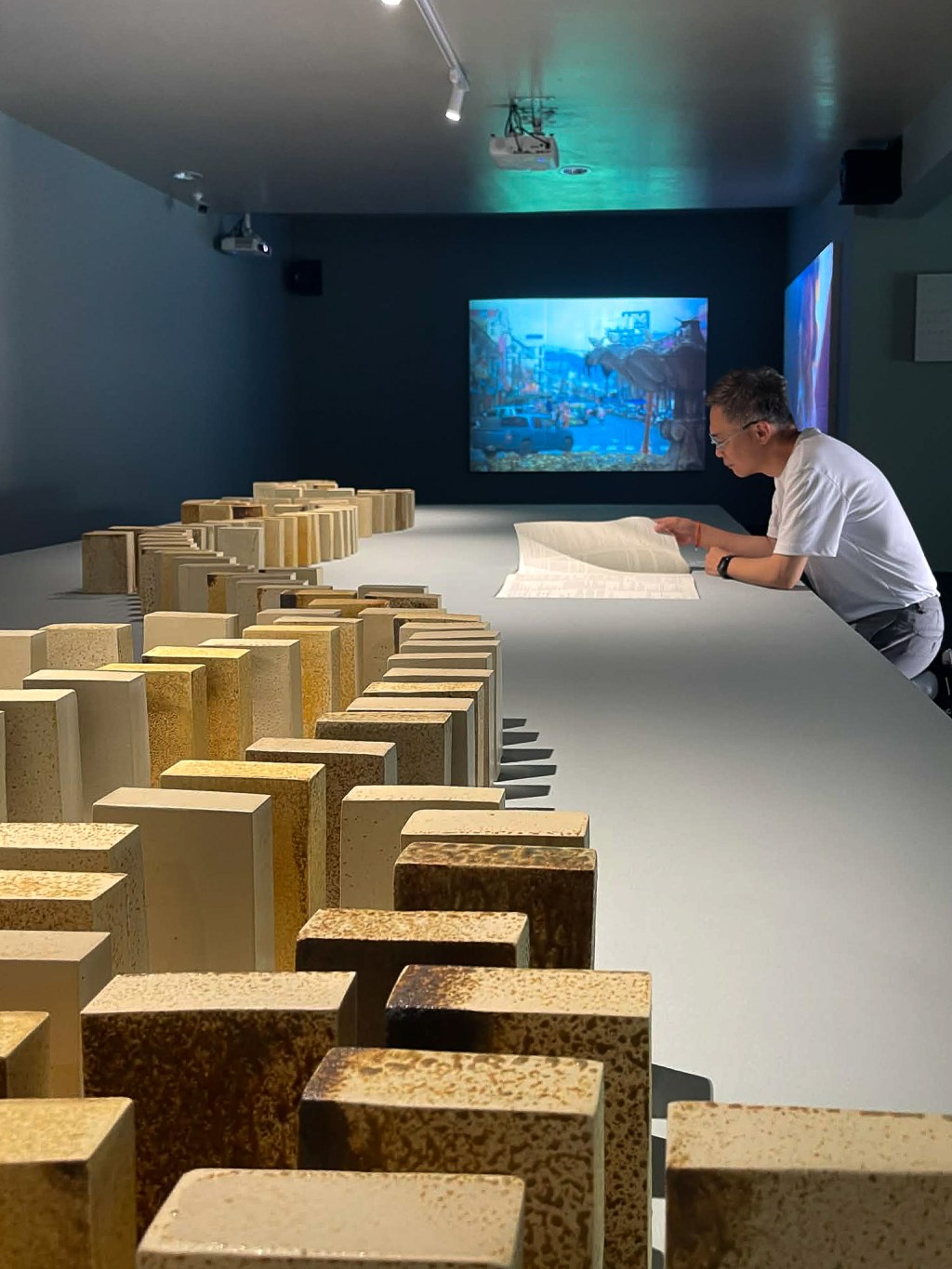
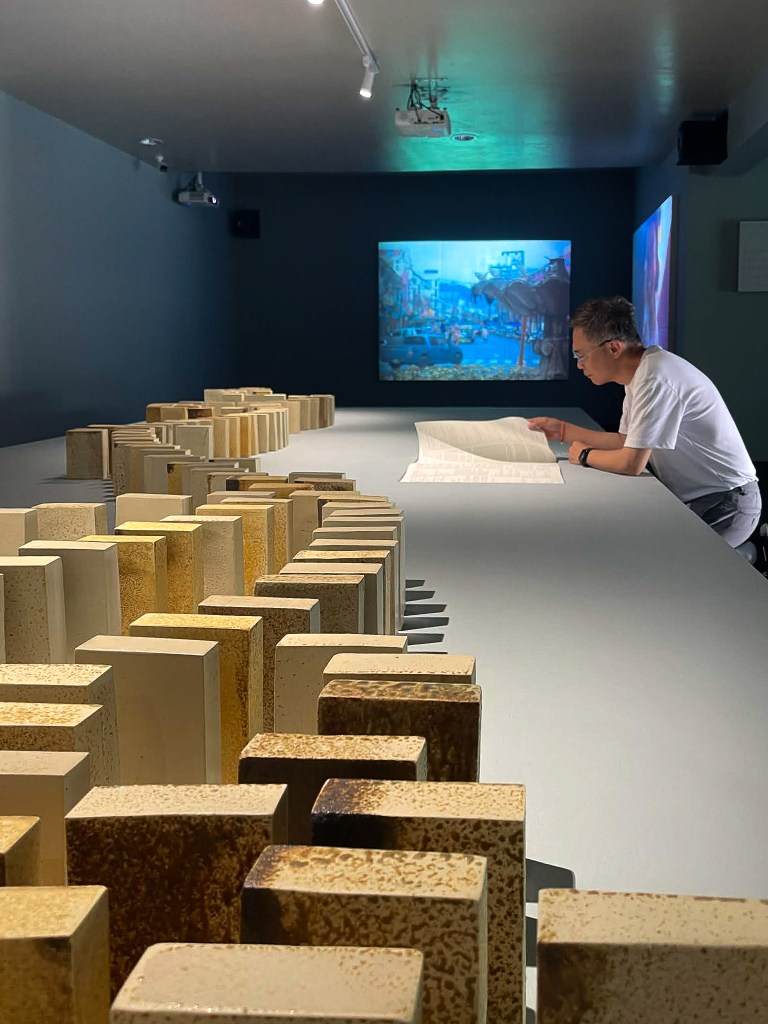
ตลอด 8 เดือนในการเดินทางสำรวจและเก็บข้อมูลในการสร้างผลงาน ศิลปินใช้ GPS ในการบันทึกเส้นทางที่เขาเดินทางไปทำความรู้จักผู้คนในภูเก็ต ข้อมูล GPS คือ “ข้อมูลบริสุทธิ์” (Raw Data) ที่เป็นตัวเลข พิกัด แผนที่ และเส้น ซึ่งดูเหมือนจะปราศจากอารมณ์ความรู้สึก แต่เมื่อถูกนำมา “จัดวาง” และ “แปลความ” (Translate) ผ่านดินเผา มันจึงถูกทำให้เป็นวัตถุที่เปรียบเสมือนตัวแทนของเขาในพิกัดต่างๆ ของเกาะภูเก็ต ในแง่นี้วัสดุดินจึงมีคุณสมบัติในการ “จดจำ” แรงกดและการกระทำ และการเลือกเผาดินด้วยน้ำเคลือบที่ผสมผสานจากวัตถุดิบที่ศิลปินได้รับมาระหว่างการเดินทาง (ผงธูปและเศษกระเบื้องจากศาลเจ้าปุดจ้อ เปลือกหอยจากชาวเล กากกาแฟจากโฮสเทล ขี้แร่จากครอบครัวที่เคยขุดแร่) คือการทำให้ประสบการณ์และความทรงจำของเขากลายเป็น “สสาร” ดินเผาแต่ละชิ้นที่วางตามพิกัดเส้นทางที่บันทึกได้จาก GPS จึงไม่ใช่แค่สัญลักษณ์แทนสถานที่เท่านั้น แต่เป็น “ร่องรอยของประสบการณ์” (Indexical Sign) เป็นร่องรอยที่เกิดจากการปะทะกันระหว่างตัวตนของศิลปินกับพื้นที่ภูเก็ต เมื่อเขาเปลี่ยนผ่านประสบการณ์ (นามธรรม) ให้กลายเป็นดินเผา (รูปธรรม) เขาจึงไม่ได้เป็นเพียงผู้เล่าเรื่อง แต่เป็นผู้ที่ถูกพื้นที่นั้น “หล่อหลอม” ขึ้นมาใหม่
ในกระบวนการสร้างสรรค์แผนที่ดินเผา กระบวนการทางเคมีจึงเป็นเครื่องมือในการจารึกความทรงจำและแสดงการเปลี่ยนผ่านตัวตนของศิลปิน นอกเหนือจากการส่งผลต่อพื้นผิวของดินเผาแล้ว น้ำเคลือบดินเผาที่เกิดจากการจัดเก็บวัตถุดิบทางกายภาพจาก “ระหว่างทาง” ในภูเก็ต จึงยังเป็นกระบวนการการกักเก็บวิถีชีวิตของชาวภูเก็ตที่เขาได้พบเจออีกด้วย ยังรวมไปถึงร่องรอยที่ไม่ได้จบลงเมื่อดินถูกยกออกจากเตาเผา แต่ “ความยังคงเปลี่ยนแปลง” ของสีสันบนพื้นผิวหลังจากนั้นยังคงดำเนินต่อไป ในทางเคมีเซรามิก การเปลี่ยนสีหลังการเผา อาจเกิดได้จากปัจจัยทางสภาพแวดล้อม เช่น ความชื้น อุณหภูมิ หรือปฏิกิริยาของอ็อกไซด์ในน้ำเคลือบที่ยังคงทำปฏิกิริยากับสภาพอากาศในพื้นที่แสดงงาน ดินเผาที่ยังคงเปลี่ยนสีระหว่างจัดแสดงผลงานตลอด 5 เดือนนี้ ได้สะท้อนว่า “ผู้วิจัย (ศิลปิน)“ และ “สิ่งที่ถูกวิจัย (เมืองและผู้คน)“ รวมไปถึงความสัมพันธ์ระหว่างกันนั้น ยังคงดำเนินต่อและเปลี่ยนแปลงไปตามกาลเวลา ความทรงจำและความผูกพันของเขาที่มีต่อภูเก็ตไม่ได้ถูกแช่แข็งไว้ในวันที่เขาเสร็จงาน แต่ความทรงจำและความสัมพันธ์นั้นยังคงถูก “ปรุง” และ “เปลี่ยน” โดยประสบการณ์ใหม่ๆ ที่เกิดขึ้นตามหลัง
นอกจากการเคลือบความทรงจำลงในสสารแล้ว ศิลปินยังสำรวจและทดลองไปยังการถอดรหัสตัวตนผ่านระบบสัญลักษณ์ ในทางสัญศาสตร์ (Semiotics) มนุษย์สื่อสารกันผ่านระบบของ “รหัส” (Codes) ไม่ว่าจะเป็นภาษา ภาพ หรือสัญลักษณ์ หากพิจารณาถึงความสัมพันธ์ระหว่าง “ชื่อ” และ “ตัวตน” ซึ่งโดยปกติ ชื่อของบุคคลทำหน้าที่เป็น Signifier (ตัวหมาย) ที่ชี้ไปยัง Signified (ตัวหมายถึง หรือตัวบุคคล รวมไปถึงตำแหน่งแห่งที่ในสังคม) แต่ในผลงานชุดนี้กลับสลายรหัสเหล่านี้จนกลายเป็นชิ้นส่วนย่อยๆ แล้วค่อยนำมาจัดองค์ประกอบจนเกิดเป็นสถานะใหม่ การนำตัวอักษรจากชื่อมาวาดเป็นใบหน้า จึงเป็นการเข้าไปจัดการกับรหัสของใบหน้ามนุษย์ ซึ่งไม่ใช่แค่สิ่งที่ติดตัวมาแต่กำเนิดเพียงอย่างเดียว แต่กลายเป็นระบบตัวแทนที่สังคมใช้ระบุตัวตนและจัดลำดับชั้น การรื้อและจัดระบบนี้ใหม่นี้เกิดจากการใช้ตัวอักษรจากชื่อของผู้คนมาเป็นวัตถุดิบหลัก อันเป็นสัญลักษณ์สำคัญที่มนุษย์ใช้แทนตัวตน (Identity) แต่เมื่อชื่อถูกนำมาแปลงรูป เปลี่ยนตำแหน่ง และจัดวางใหม่จนกลายเป็นเส้นสายที่ประกอบกันเป็นโครงหน้ามนุษย์ “ความหมาย” ของชื่อเดิมก็เจือจางลงไป ตัวอักษรไม่ได้ทำหน้าที่บอกว่า “ใครเป็นใคร” อีกต่อไป แต่ทำหน้าที่เป็นทัศนธาตุ (Visual Elements) ที่สร้างใบหน้าใหม่ขึ้นมา
กระบวนการนี้ทำให้เกิดภาวะการสลายอัตลักษณ์ (Dis-identification) ใบหน้าที่ปรากฏจึงเป็นใบหน้าที่ “มีความคลุมเครือในการระบุตัวตน” อาจเรียกได้ว่าเป็นรูปธรรมที่ลดทอนความเป็นนามธรรมของชื่อเสียงเรียงนามลง จนเหลือเพียงความเป็นมนุษย์ด้วยกัน และเมื่อหน้าเหล่านี้ถูกจัดทำเป็น “นามบัตร” โดยไม่ได้คำนึงถึงสถานะและลำดับชั้นทางสังคม จึงเป็นการใช้สื่อชนิดนี้มาเป็นสัญลักษณ์ในการทำให้ผู้คนที่เขาได้พบเจอนั้นมีตัวตนขึ้นมา แล้วนำกลับไปมอบให้ผู้คนเหล่านั้น นามบัตรจึงเป็นภาษาทางการออกแบบที่ถูกใช้รับรองการดำรงอยู่ของพวกเขา โดยนามบัตรทั้ง 132 ใบผลิตด้วยการปั๊มนูนด้วยแม่พิมพ์โลหะ นามบัตรแต่ละใบถูกนำเสนอในกล่องไม้ที่ถูกติดตั้งบนผนังวางเรียงกัน เชิญชวนให้ผู้ชมได้เข้าใกล้มาทำความรู้จักผู้คนไปทีละคน ผ่านรอยนูนของตัวอักษรบนกระดาษ ดังข้อความที่สันติประทับใจจากโฮสเทลที่เขาพักเป็นประจำว่า “เพราะเนิ่นนาน เราจึงรู้จักกัน”
ระหว่างทาง ศิลปินได้บันทึกบทสนทนากับผู้คนที่เขาพบที่ภูเก็ตไว้เกือบตลอด เขาเลือกตีพิมพ์ “บทสนทนา” ทั้งหมดในรูปแบบที่อิงกับหนังสือพิมพ์ ซึ่งในเชิงสัญลักษณ์แล้วหนังสือพิมพ์คือสื่อที่สื่อถึง “ช่วงเวลาหนึ่งๆ” (A Moment in Time) และมีน้ำหนักทางกายภาพ การอ่านหนังสือพิมพ์ต้องอาศัยวงแขนในการเปิด การจดจ่อกับตัวอักษรจำนวนมาก การสัมผัสพื้นผิวของกระดาษ และการได้รับกลิ่นหมึก อาจตีความได้ว่าเขาใช้สื่อชนิดนี้เพื่อ “หยุดเวลา” ของบทสนทนาที่อาจจะเลือนหายไปให้คงอยู่บนหน้ากระดาษ เขาเปลี่ยนถ้อยคำให้กลายเป็นรอยประทับ (Impression) แปลงให้ความทรงจำนั้นฝังแน่นด้วยแรงกดทับทางกายภาพจากกระบวนการพิมพ์ บทสนทนาที่ถอดออกมาคำต่อคำของผู้คนในภูเก็ตจึงไม่ได้เป็นเพียงข้อมูลที่ถูกปรับแต่งเพื่อเป็น “ข่าวสาร” หากแต่เป็น “มวลสาร” ที่ผู้ชมต้องประคับประคองและใช้เวลาอยู่กับมันอย่างจริงจัง
ในส่วนสุดท้ายของนิทรรศการ ศิลปินเลือกสื่อสารผ่านวิดีโอที่มีความยาวรวมถึง 90 นาที โดยใช้ฟุตเทจที่ถ่ายต่อเนื่องยาวหลายๆ ชิ้นนำมาต่อกัน เพื่อจำลองเวลาจริงของเหตุการณ์ที่เขาได้ใช้เวลาร่วม โดยจัดวางเป็นการฉายวิดีโอสองจอ เพื่อนำเสนอภาพเหตุการณ์แบบคู่ขนาน ทำให้เกิดการสลับไขว้ของห้วงเวลา สถานที่ และกิจกรรม ชวนให้ผู้ชมรับรู้แบบ “ภาพปะติด” (Montage) ที่สามารถพบความสอดคล้องของเหตุการณ์ที่ดูเหมือนไม่เกี่ยวข้องกันแต่มารวมกันในห้วงเวลาเดียว คล้ายความทรงจำของมนุษย์เราที่ไม่ได้แยกส่วนเป็นแฟ้มข้อมูล แต่กลับเป็นสายน้ำที่ไหลบ่าและทับซ้อนกัน
ศิลปินจงใจฉายวิดีโอนี้ลงบนแม่พิมพ์ออฟเซ็ต (Offset Plates) ที่มาจากการพิมพ์หนังสือพิมพ์ ซึ่งมีถ้อยคำของผู้คนโปรยอยู่ การใช้แม่พิมพ์เป็นจอรับภาพจึงเชื่อมโยงถึงบทสนทนาที่ได้ “ประทับ” (Imprint) ประสบการณ์ลงบนตัวศิลปิน และถูกส่งต่อร่องรอยเหล่านั้นออกมาผ่านภาพที่สั่นไหวบนแผ่นโลหะสะท้อนถึงความทรงจำ อันลื่นไหลและเปลี่ยนแปลงตลอดเวลาตามแสงและเงาที่ตกกระทบ
แม้แม่พิมพ์จะเป็นสัญลักษณ์ของการผลิตซ้ำ แต่เมื่อมันถูกนำมาใช้รับภาพวิดีโอที่เป็นประสบการณ์เฉพาะตัว มันจึงเกิดความย้อนแย้งที่น่าสนใจ ภูเก็ตในสายตาของเขาที่ฉายผ่านแม่พิมพ์้หล่านี้ จึงไม่ใช่ภูเก็ตในแผ่นพับท่องเที่ยวที่ผลิตซ้ำได้ แต่เป็นภูเก็ตที่ “ถูกจารึก” ลงบนความทรงจำของศิลปินและผู้ชมอย่างเป็นเอกเทศ วิดีโอ 90 นาทีนี้จึงเปรียบเสมือนการ “อาบ” ผู้ชมด้วยบรรยากาศของพื้นที่และเวลา จนกระทั่งกำแพงระหว่าง “เขา” (คนในภาพ) “เรา” (ผู้ชม) และ “ศิลปิน” พังทลายลง เหลือเพียงสภาวะระหว่างกลางที่ทุกคนกลายเป็นส่วนหนึ่งของกันและกันในที่สุด
ในภาพรวมของผลงาน “ภูเก็ต ยินดีที่ได้รู้จัก“ การจัดวางร่วมกันระหว่าง สิ่งที่ “ดูเหมือนจะนิ่งแต่เปลี่ยน” (ดินเผา) สิ่งที่ “ดูเหมือนจะเปลี่ยนแต่ถูกฉายซ้ำ” (วิดีโอที่วนลูป) รวมไปถึงสิ่งที่ “หลบตาแต่เชื้อเชิญให้เข้ามา” (นามบัตร) จึงสะท้อนภาวะ “The In-Between” ที่สันติพยายามจะสื่อสารถึงภูเก็ตในความรับรู้ของเขาไม่ใช่วัตถุที่คงที่แน่นิ่ง ไม่ใช่ความชัดเจนจนสัเกตได้ในแรกเห็น ไม่ใช่ภาพยนตร์ที่จบในตอน แต่มันคือ “กระบวนการของการกลายเป็น” ที่เวลา (Duration) ไม่ใช่สิ่งที่แบ่งเป็นวินาทีได้ แต่เป็นกระแสที่ไหลบ่าและเปลี่ยนแปลงอยู่ข้างในเสมอ
ผลงาน “ภูเก็ต ยินดีที่ได้รู้จัก” ของ สันติ ลอรัชวี จึงสะท้อนให้เห็นว่ากระบวนการสร้างสรรค์เมื่อถูกนำมาใช้ร่วมกับแนวคิดทางมานุษยวิทยาและสัญศาสตร์ สามารถสร้าง “ความรู้ชุดใหม่” เกี่ยวกับพื้นที่ได้ เขาจึงไม่ได้นำเสนอภูเก็ตในฐานะวัตถุแห่งการจ้องมอง แต่นำเสนอภูเก็ตในฐานะ “เครือข่ายของความสัมพันธ์” ที่เขาได้เข้าไปเป็นส่วนหนึ่ง การเป็น “The In-between” ทำให้เขาสามารถสลายตัวตนเดิมเพื่อรับเอาตัวตนใหม่ที่ประกอบขึ้นจากบทสนทนา ประสบการณ์กับผู้คน พื้นที่ที่ได้เยี่ยมเยือนและพำนักอาศัย สุดท้ายแล้ว “ร่องรอย” ที่เขาแสดงไว้ในผลงานชุดนี้ จึงไม่ใช่แค่การเล่าเรื่องเท่านั้น แต่ยังเชิญชวนให้เราทุกคนตั้งคำถามว่า ในทุกๆ วันที่เราก้าวเดินไปในพื้นที่ต่างๆ เราได้ทิ้งร่องรอยของ “มิตรภาพ” และ “การเรียนรู้” ไว้บนพื้นผิวแห่งความทรงจำหรือไม่
อย่างไรก็ตาม ท่ามกลางกระบวนการของการเปลี่ยนประสบการณ์ให้เป็นสสาร เราอาจต้องหยุดตั้งคำถามสำคัญกับร่องรอยเหล่านี้ว่า ในโลกที่เต็มไปด้วยการหยิบฉวยอัตลักษณ์มาใช้งาน การที่ศิลปินเข้าไป “นิยาม” ความหมายของพื้นที่ผ่านมุมมองส่วนตัวนั้น เป็นเพียงการสร้างภาพจำชุดใหม่ทับซ้อนลงไปหรือไม่? ผลงานนี้จึงไม่ใช่คำตอบสำเร็จรูปว่าภูเก็ตคืออะไร แต่คือการเปิดเปลือยให้เห็น “ความพยายาม” ที่จะลดทอนอำนาจของผู้สังเกตการณ์ลง เพื่อกลายเป็นส่วนหนึ่งของเครือข่ายความสัมพันธ์ที่ไหลเวียนอยู่จริง
คำถามที่ทิ้งไว้ให้เรานำกลับไปขบคิดต่อจึงไม่ใช่แค่เรื่องของศิลปะ แต่คือเรื่องของชีวิตประจำวันว่าในพื้นที่และสังคมที่เราใช้ชีวิตอยู่ทุกวันนี้ เรากำลัง “รู้จัก” กันผ่านป้ายกำกับที่สังคมประทับตราให้ หรือเราได้ลองหยุดนิ่งพอที่จะมองเห็น “ร่องรอย” ที่แท้จริงของความเป็นมนุษย์ในตัวกันและกันบ้าง สุดท้ายแล้ว “ภูเก็ต ยินดีที่ได้รู้จัก” จึงทำหน้าที่เป็นทั้งกระจกเงาและเข็มทิศ มันวิพากษ์ให้เราเห็นความฉาบฉวยของการสื่อสารในยุคปัจจุบัน ขณะเดียวกันก็อาจจุดประกายให้เราอยากลุกขึ้นมาเป็น “ผู้ร่วมสร้างความหมาย” ให้กับโลกใบนี้ด้วยตัวเอง
หากเราสมาทานคำว่า “ยินดีที่ได้รู้จัก” กับโลกอย่างตั้งอกตั้งใจและเนิ่นนานพอ เราอาจพบว่าตัวตนของเราเองก็กำลังถูก “แก้ไขและต่อเติม” ให้งดงามขึ้นผ่านมิตรภาพและการเรียนรู้… และเมื่อนั้นเอง พื้นที่ที่เคยแปลกหน้าจะกลายเป็นพื้นที่ที่มีชีวิต และสังคมที่เราอยู่จะเปี่ยมไปด้วยร่องรอยของความหมายที่เราเป็นผู้จารึกมันขึ้นมาด้วยมือของเราเอง
ปัญญาประดิษฐ์ สติประดอย
26 มีนาคม 2569
#PhuketNiceToMeetYou #ThailandBiennalePhuket2025 #SantiLawrachawee #PracticalDesignStudio #SANTIvitheeOKbab #ContemporaryArt #DesignAnthropology #TheInBetween
–––––––––––––––––––––––––––––––––
When We Sincerely Say “Nice to Meet You” to This World
The question, “How do we truly know a place?” in a contemporary world of communication—cluttered with the relentless reproduction of both truth and misinformation—cannot be answered simply through the lens of a tourist or via ready-made data. For Santi Lawrachawee, the artwork “PHUKET NICE TO MEET YOU” at the Thailand Biennale, Phuket 2025, serves as a case study in using the design process as a tool for exploring the meaning of existence and the creation of relationships between humans and spaces through the lenses of semiotics and anthropology.
A pivotal turning point in this work is the crossing of boundaries: moving from being a media producer who follows a brief to a “problem-creator” searching for new essential truths. Santi does not view Phuket merely as a geographical coordinate or a tourist destination with a fixed identity. Instead, he sees Phuket as a “Living Space”—composed of the fluidity of memory, conversations, and overlapping traces of relationships. This work is thus a construction of memory, meticulously arranged into a tangible form.
One might begin to understand this work through its research methodology. The artist does not position himself as an “Objective Observer” standing above the situation but rather immerses himself as a “Subjective Participant.” This approach believes that truth is not born from sight alone but from “experience flowing through the body and mind” of the researcher. Theoretically, this challenges the framework of objectivity by suggesting that human perception is inherently biased and emotional. Santi seems to use coincidence, the “bias of friendship,” and personal impressions as a compass for collecting and filtering data. This process transforms the artwork into an Internal Monologue that communicates with the outside world.
The artist positions himself in “The In-Between,” or what may be called a state of Liminality (from the Latin Limen, meaning “threshold”). This is a state where an individual has moved past one status but has not yet reached another. This state is crucial because it is a time when “old rules no longer apply, and new rules have yet to be born,” allowing for creative freedom. As an artist, while he cannot claim to be an “Insider” (a local), he refuses to be a mere “Outsider” (a tourist). Standing on this threshold of relationship allows him to see the “Traces” that locals might overlook due to familiarity and access meanings that outsiders miss due to a lack of connection. The state of “I am as the in-between” is not just about being a mediator; it is an admission that his identity is being “extended” and “edited” by the people and places he encounters.
Over eight months of exploration and data collection, the artist used GPS to record the routes he took to meet people in Phuket. GPS data is “Raw Data”—numbers, coordinates, maps, and lines—seemingly devoid of emotion. However, when “arranged” and “translated” through terracotta, it becomes an object representing him at various coordinates on the island. In this sense, clay possesses the quality of “remembering” pressure and action. By glazing the clay with materials gathered during his journey—incense ash and tile fragments from the Put Jaw Shrine, sea shells from the Chao Lay people, coffee grounds from a hostel, and mineral tailings from a former mining family—Santi turns his experiences and memories into “Matter.” Each piece of terracotta placed according to GPS coordinates is not just a symbol of a location; it is an Indexical Sign—a trace born from the collision between the artist’s self and the space of Phuket. By transitioning abstract experience into concrete terracotta, he becomes more than a storyteller; he is someone “molded” anew by the space itself.
In the creation of the terracotta map, the “chemical process” becomes a tool for inscribing memory and manifesting the artist’s transformation. Beyond affecting the surface, the Glaze Calculation—derived from physical materials collected “along the way”—acts as a vessel for the lifestyles of the Phuket people he met. This includes traces that do not end when the clay is removed from the kiln. The “Post-firing color change” continues. In ceramic chemistry, this change may occur due to environmental factors such as humidity, temperature, or the reaction of oxides in the glaze still “breathing” and interacting with the air of the exhibition space. The terracotta that continues to change color throughout the five-month exhibition reflects that the “researcher” (artist) and the “subject” (city and people), as well as their relationship, remain ongoing and ever-changing. Santi’s memory and bond with Phuket were not frozen on the day the work was completed; they continue to be “brewed” and “transformed” by subsequent experiences.
Beyond glazing memories into matter, the artist explores the decoding of identity through symbolic systems. In Semiotics, humans communicate through “Codes”—language, images, or symbols. Normally, a person’s “Name” acts as a Signifier pointing to a Signified (the individual and their social status). However, in this work, these codes are dissolved into fragments and reassembled into a new state. Transforming letters from names into facial drawings manages the code of the human face, which is not just an innate biological feature but a representation system used by society to identify and rank. This restructuring uses names—the primary symbol of identity—as raw material. When names are reshaped and rearranged into the lines of a human face, the original “meaning” of the name fades. Letters no longer function to tell “who is who” but act as Visual Elements creating a new countenance.
This process results in Dis-identification. The appearing faces are “ambiguous in identity”—a concrete form that reduces the abstraction of a name down to shared humanity. When these faces are turned into “Name Cards”—a medium usually reserved for social status—and given back to the people he met, it validates their existence regardless of hierarchy. These 132 name cards, produced via metal plate embossing and presented in wooden boxes on the wall, invite viewers to get close and meet each person through the tactile ridges of letters on paper. It echoes a sentiment he found at a local hostel: “Bound by duration, we became known to one another.”
Along the way, the artist recorded almost all conversations with the people he met. He chose to print these “Conversations” in a format resembling a Newspaper. Symbolically, a newspaper represents “A Moment in Time” and possesses physical weight. Reading it requires the span of one’s arms, focus on a vast number of letters, the touch of paper, and the scent of ink. He uses this medium to “freeze time” for conversations that might otherwise fade. He transforms words into Impressions, embedding memories through the physical pressure of the printing process. The word-for-word dialogue is not just “news” to be consumed; it is “Mass” that the audience must cradle and spend time with seriously.
In the final part of the exhibition, the artist communicates through a 90-minute video, using long-take footage stitched together to simulate the real time he spent. Arranged as a two-screen parallel projection, it creates a cross-section of time, place, and activity. This Montage allows viewers to find correspondences between seemingly unrelated events occurring in the same span—much like human memory, which is not a separate file but a rushing, overlapping stream.
Santi deliberately projects this video onto Offset Plates used to print the newspapers. Using these plates as a screen connects the conversations “imprinted” on the artist to the vibrating images on the metal surface, reflecting memories that are fluid and constantly changing according to the hit of light and shadow. While the plates are symbols of mass reproduction, using them to receive a video of a singular, personal experience creates a fascinating paradox. The Phuket seen through these plates is not the Phuket of a reproduced travel brochure; it is a Phuket “Inscribed” into the memory of the artist and the viewer independently. This 90-minute immersion breaks down the walls between “Him” (the person in the video), “Us” (the viewer), and “The Artist,” until only the “In-between” remains, where everyone becomes a part of one another.
Overall, the installation of “PHUKET NICE TO MEET YOU”—the juxtaposition of what “seems still but changes” (terracotta), what “seems to change but is looped” (video), and what “shuns the eye but invites you in” (name cards)—reflects the state of The In-Between. Phuket, in Santi’s perception, is not a static object or a clarity observed at first glance. It is a “Process of Becoming” where Duration is not measured in seconds but as a current flowing and changing within.
This work reflects that the creative process, when paired with anthropology and semiotics, can create a “New Body of Knowledge” about a space. He does not present Phuket as an Object of the Gaze but as a “Network of Relationships” that he has become a part of. Being “The In-between” allowed him to dissolve his old self to receive a new one composed of dialogue and experience. Ultimately, the “traces” he displays are not just stories; they are an invitation for all of us to ask: In our daily walks through various spaces, do we leave traces of “Friendship” and “Learning” on the surface of memory?
However, amidst this process of turning experience into matter, we must pause to ask a critical question of these traces: In a world full of identity appropriation, is the artist’s act of “defining” the meaning of a space through a personal lens merely creating a new layer of imposed imagery? This work is not a final answer on what Phuket is, but an exposure of the “effort” to reduce the observer’s power and become a part of the truly flowing network of relationships.
The question left for us to ponder is not just about art, but about daily life: In the spaces and societies we inhabit today, do we “know” each other through the labels society has stamped upon us, or have we paused long enough to see the true “traces” of humanity in one another? Ultimately, “PHUKET NICE TO MEET YOU” serves as both a mirror and a compass. It critiques the superficiality of contemporary communication while sparking a desire in us to become “Co-creators of Meaning” in this world ourselves.
If we sincerely say “Nice to meet you” to the world, and for a long enough duration, we may find that our own identities are being “edited and extended” into something more beautiful through friendship and learning. And in that moment, the space that was once a stranger becomes a living place, and the society we live in becomes filled with the traces of meaning that we have inscribed with our own hands.
ปัญญาประดิษฐ์ สติประดอย
(Artificial Intelligence, Mindful Craft)
March 26, 2026
 S A N T I v i t h e e O K b a b
Leave a comment